True luxury isn’t a price tag. It’s rarity, permanence, and the kind of material choice that still looks extraordinary decades from now. Anyone can buy something expensive. Far fewer people know how to buy something that will hold up, both structurally and emotionally, without the delays and budget blowouts that come from sourcing stone across global quarries.
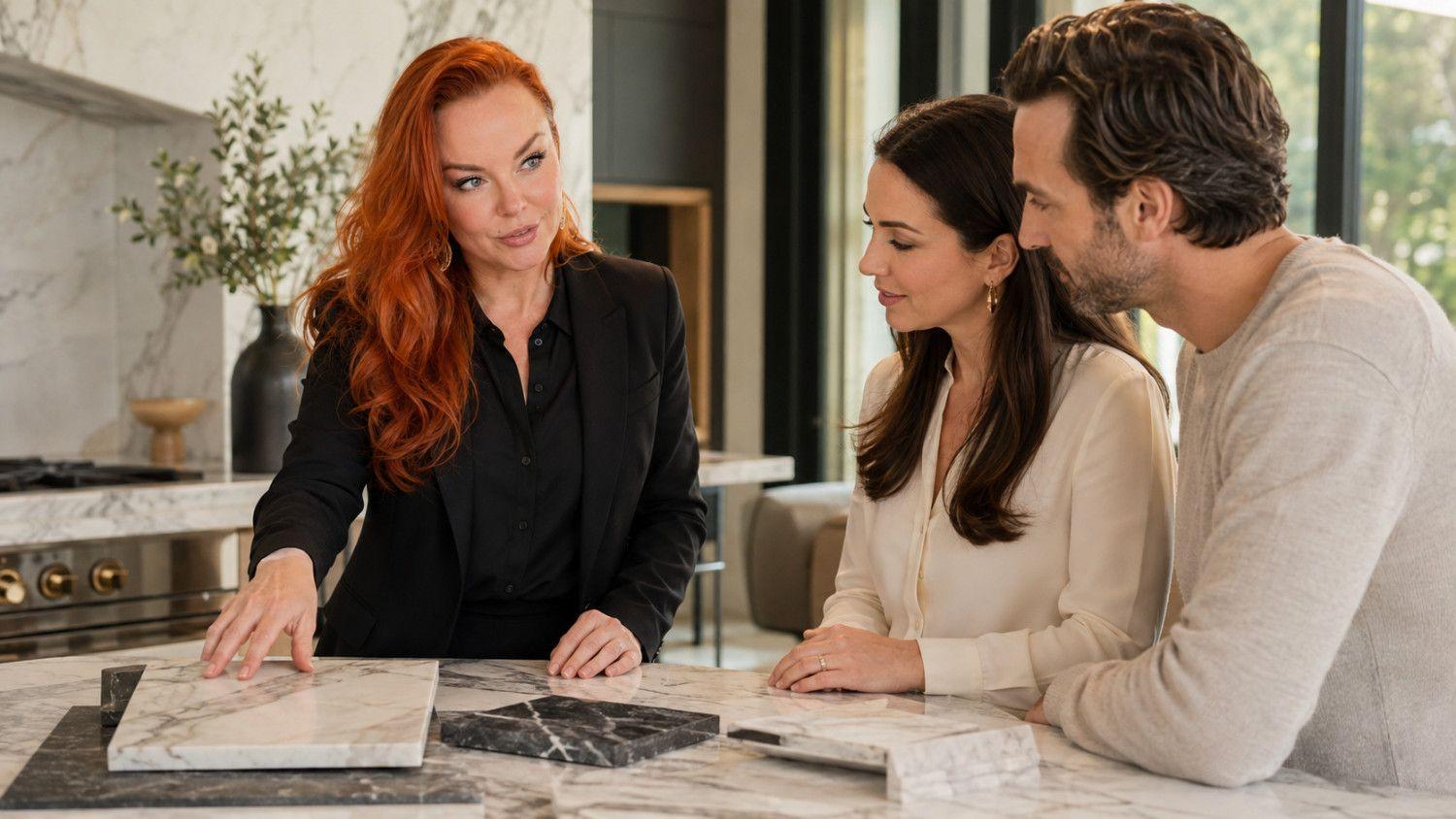
On LUXEtalk, I had the pleasure of sitting down with Olga Rakhmatulina of Olga Marble, a luxury stone strategy advisor with over 20 years of experience guiding developers and architects through high-value stone procurement, from the quarry floor to final installation. During our conversation, Olga shared insights that will definitely change the way agents and homeowners think about material decisions for their properties.
Here’s a preview of that episode:
Why I Had This Conversation
I see the same pattern constantly in my own work at Lisa Berg Real Estate: buyers walk through a home and know within seconds whether the finishes feel authentic or cheap. Stone is one of the biggest tells.
Olga has spent over two decades working directly with quarry owners across dozens of countries, and she’s built her entire business, offering luxury stone procurement and advisory, on saving developers from six-figure mistakes before they ever reach a job site.
I wanted her perspective on why so many high-end builds go wrong, and how the right sourcing partner changes everything from budget to legacy value.
Watch the full episode here:
What Luxury Actually Means
When I asked Olga how she defines luxury after two decades sourcing high-value natural stone for developers and architects, her answer wasn’t about price at all.
Rarity comes first, in her view. If you can walk into a retail showroom and buy it off the shelf, it isn’t luxury; it’s inventory. Some of the materials Olga sources, like rare Bardiglio and Calacatta blocks, carry six-to-eight-month wait lists because there simply isn’t more of it being quarried.
Ecology and longevity come right after. Olga pushes her clients to think about how a material ages, not just how it looks on day one. Natural stone develops a patina instead of becoming trash, and it can be repaired rather than replaced, something engineered materials like porcelain or quartz can’t offer in the same way.
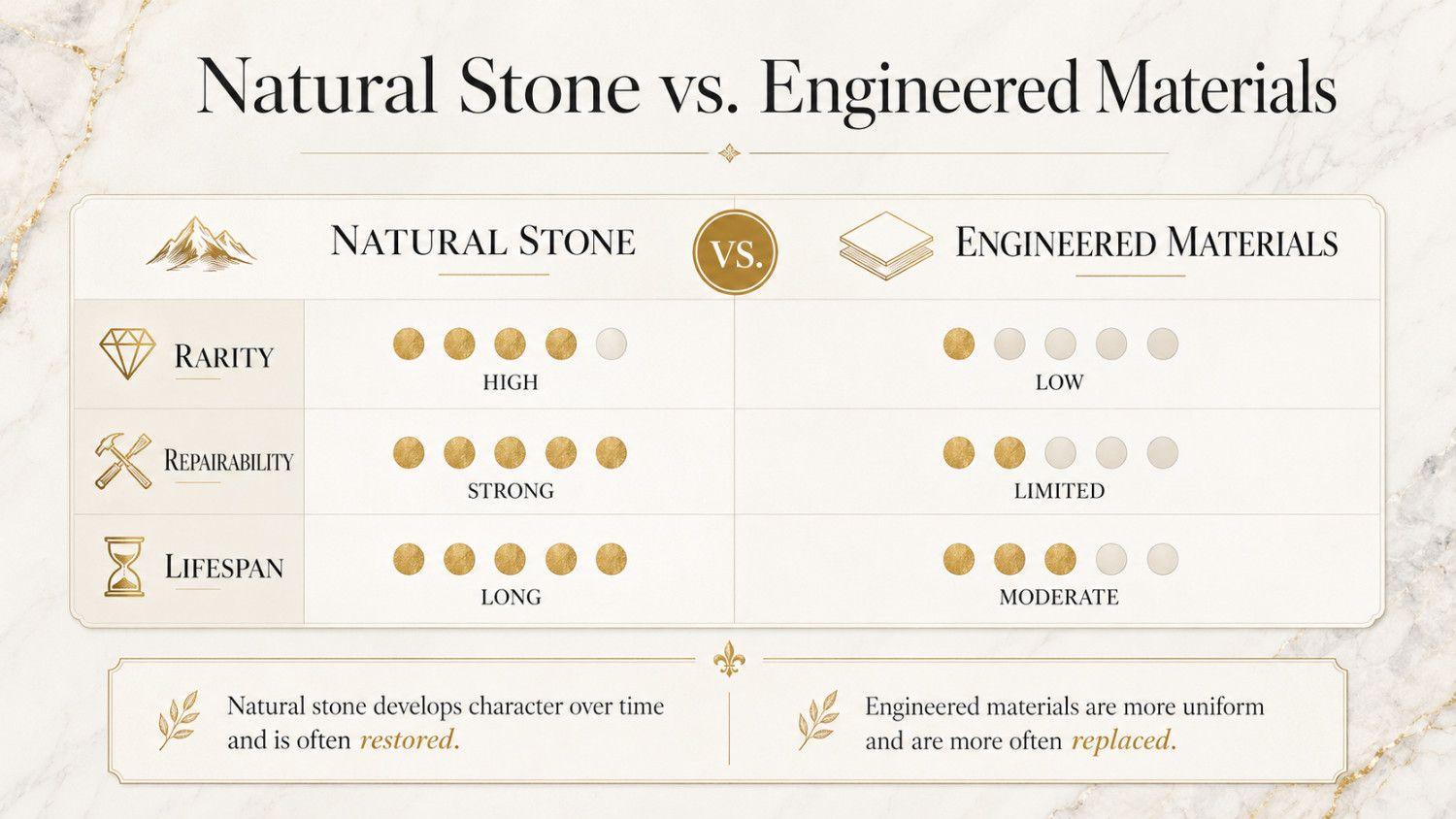
That distinction matters most in commercial spaces. Olga pointed to hospitality projects where a natural stone surface can be repaired indefinitely, while cheaper alternatives get torn out and replaced every few years, a hidden cost most developers never calculate up front.
Avoiding Costly Stone Mistakes
One of the most eye-opening parts of our conversation was hearing how often expensive mistakes happen, not from bad intentions, but from a lack of coordination. Olga described a project where a designer had already selected a stone for a hotel lobby, only for her to step in and stop it before installation.
“I opened the drawings and saw the stone the designer picked for the entrance lobby, and I knew in six months it would be trash. I had to say — you cannot use this material here.”
That’s the value of real luxury stone procurement experience: knowing not just what looks good in a rendering, but how a material performs under the specific traffic, humidity, and use of a space. Olga explained that marble alone has four distinct structural types, and matching the wrong type to the wrong application is one of the most expensive mistakes a developer can make.
Sourcing Across Global Quarries
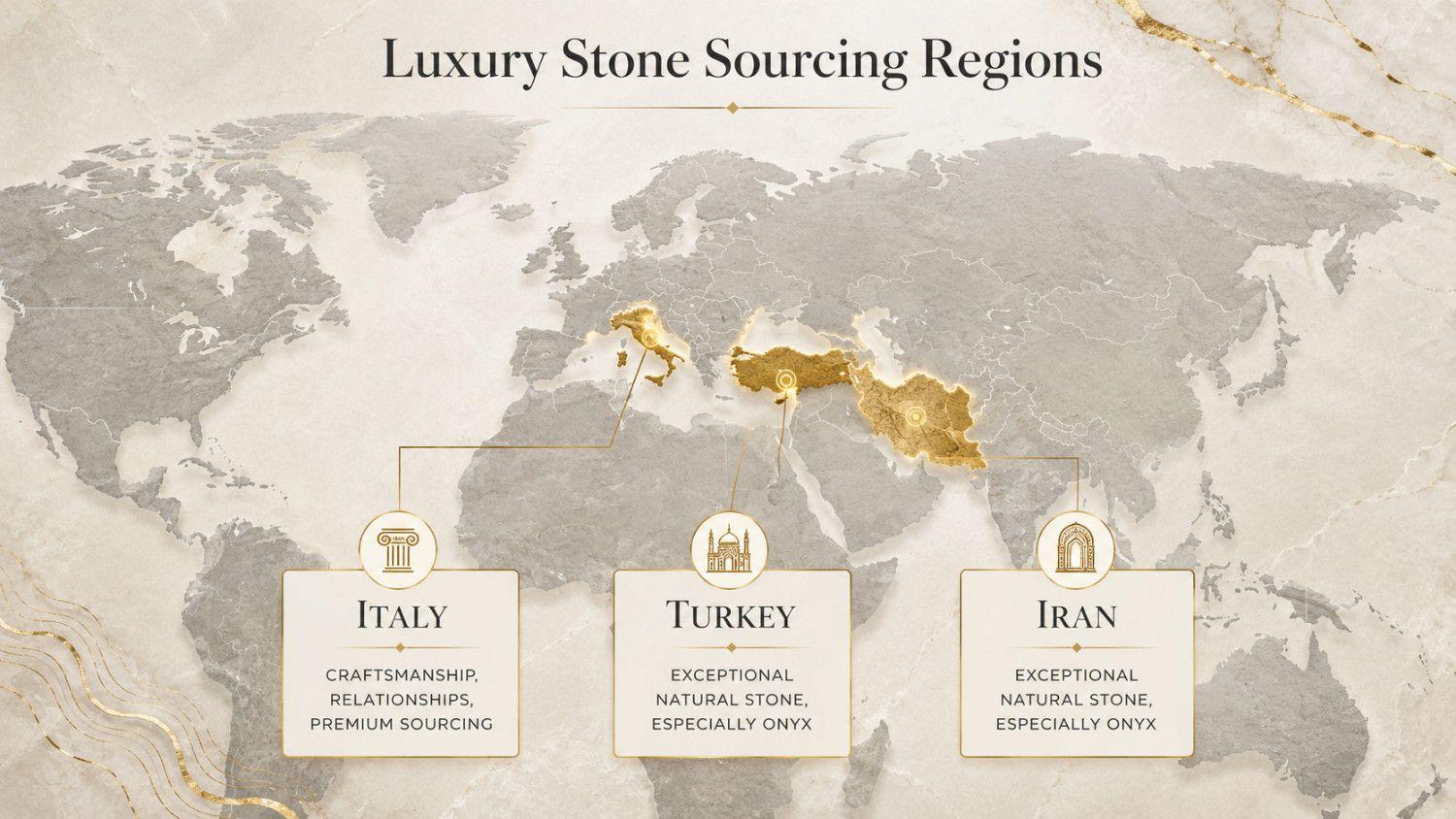
Olga has personally visited quarries in 46 countries, and she was candid about where the strongest stone quarry sourcing relationships really live. Italy, she told me, remains unmatched, not just for the material, but for the craftsmanship and respect for the process that comes with it.
Turkey and Iran also produce exceptional stone, especially onyx, but Olga noted that access in Italy often depends on relationships built over years, not just budget.
Without the right connections, even well-funded buyers can end up overpaying or waiting far longer than expected. This is exactly why Olga positions herself as the single point of contact between quarry and installation, coordinating delivery timing, supplier selection, and quality control so nothing gets lost between countries or contractors.
Choosing the Right Stone for the Right Space
Not every space calls for the same stone, and this is where Olga’s guidance becomes especially valuable for luxury real estate design. Polished marble can be stunning in an entryway but genuinely risky around a pool or in a home with young children.
“You have to give them a solution. How does your polished floor not become slippery, especially when you’re customizing a home for kids? Natural stone lets you do that. You just have to know how.”
Olga described custom techniques for texturing and protecting softer stones like onyx, which let designers use dramatic, once-avoided materials safely, even in high-traffic residential settings. It’s a reminder that luxury isn’t about restriction. It’s about the right expertise applied to the right material.
What Changed for Me After This Conversation
“Luxury doesn’t mean you have to pay more. It means you have to pay smart.”
My conversation with Olga changed how I talk to my own clients about finishes. I used to treat stone selection as a design detail decided late in the process. Now, I see it as a budgeting and legacy decision that belongs alongside the architectural plans from day one.
When I’m walking buyers through luxury properties in Washington, I find myself asking the same questions Olga asks her own clients: What’s the budget? Who lives here? How long do you plan to stay? Those answers change which materials actually make sense, and they change how I explain value to a buyer standing in a kitchen or lobby for the first time.
Want to hear my full conversation with Olga Rakhmatulina of Olga Marble to learn more about luxury stone procurement and how she saves developers from costly mistakes?
Frequently Asked Questions
What makes natural stone more valuable than engineered materials like quartz or porcelain?
Natural stone is rarer, ages with a patina instead of wearing out, and can typically be repaired rather than replaced. Engineered materials, like quartz and porcelain, are more consistent and often more affordable, but they don’t offer the same long-term repairability or uniqueness that high-end buyers are usually looking for.
How do I avoid costly material mistakes on a high-end build?
Working with an advisor who oversees the entire process, from drawings to installation, is the single biggest safeguard. Olga specializes in exactly this: matching the right stone type to the right application before a costly mistake ever reaches the job site.
Is natural stone safe to use in high-traffic or family homes?
Yes, with the right technique. Modern sealing and texturing methods make it possible to use even historically delicate materials like onyx in family homes, provided the installation accounts for slip resistance and daily wear from the start.
Apply as a Guest on LUXEtalk
Real estate is evolving. Buyers expect more than square footage. They expect authenticity, craftsmanship, and materials that hold their value. Talking with Olga Rakhmatulina of Olga Marble reminded me how much a single conversation can reshape the way I advise clients.
If you’re actively working in luxury real estate, design, or high-value construction and have insights worth sharing, I’d love to have you on LUXEtalk!
LUXEtalk is produced by Icons of Real Estate, the #1 Real Estate Podcast Network. If you are a real estate professional, apply to be a guest speaker across the network!