
A home sells on feeling, not just square footage. That’s the thread running through my conversation with Michelle Golay of Faith Design, who has spent fifteen years turning empty or awkward rooms into spaces buyers can picture themselves living in.
We talked about furniture placement, lighting, color, and the smaller touches that change how a house feels the moment someone walks through the door.
Curious about this conversation? Check out the snippet below before diving into the full episode:
The Instinct That Turns an Empty House Into a Home Buyers Can Picture Living In
Michelle didn’t start out planning to become a stager. She studied journalism and communication, taught herself graphic design on the job, and spent years in event planning before any of it touched real estate. Then she had to sell her own family home. Getting it ready to list was the moment everything clicked.
That was around 2010, right as staging was starting to take off in the Seattle market. Michelle described it almost like muscle memory. Setting up a room for sale wasn’t so different from setting up an event. She started asking other stagers questions, picked up what she could, and built a business almost by accident. Fifteen years later, she’s still at it.
What stood out to me is how practical her instincts are. She walks into a room and immediately sees where the sofa goes, where the chairs go. But she’s also thinking about how a buyer will actually use the space and whether the layout makes sense to someone who’s never lived there. That combination of eye and logic is a big part of why brokers keep calling her back.
If you’re weighing whether professional staging is worth the investment before you list, our guide to getting your home ready for the market breaks down where that spend tends to pay off.
Watch the full video here:
Small Upgrades That Make a Home Feel More Expensive Without Overspending
Michelle’s approach to elevating a space comes down to intentional choices, not big budgets. Bigger pillows, down-filled inserts, a mix of textures, and a little faux fur go a long way. She’s also picky about candles and artwork, since cheap versions of both can make a room look worse instead of better.
She explained her thinking on home staging tips like this:
“Um, so I have a lot less flexibility in terms of what color goes on the wall and things like that. So, for me, I’m extremely practical, which has a lot to do with the way I was raised. And I can pretty much immediately walk into a room and see a sofa goes there, chairs go there. But I’m also always thinking, how will a room be practically used? How will a potential buyer walk in and think, does this make sense? Could we replicate this? And so in terms of intentionality, I’m always extremely intentional about where I place accessories. Does it make sense? And I know in staging sometimes you just put an object on a coffee table because you need an object on a coffee table. Well, for me, I like little touches like a candy dish that has candy in it is an intentional thing that I will do. And then again, room flow is extremely important. So when I walk in, I think that way, you know, how are people going to walk around furnishings? Are they going to sit down? Where are they going to sit down? What are they going to be looking at when they sit down?”
She’s also honest about where to spend and where to save. Reusable pieces are worth a little extra. One-off items that only make sense for a single house don’t need to be expensive. According to the National Association of Realtors’ 2025 Profile of Home Staging, staged homes commonly see a 1 to 10 percent bump in dollar value offered, which lines up with exactly the kind of low-cost, high-impact choices Michelle described.
Lighting came up too. Michelle can’t stand harsh, bright overhead fixtures that contractors and flippers tend to default to.

Her fix is simple: focus on lumens and warmth instead of wattage, and always bring in lamps. The Federal Trade Commission’s guide to comparing lumens and watts backs this up, confirming that brightness has nothing to do with the wattage number people are used to shopping by. For anyone wanting a full walkthrough of what Michelle actually brings into a listing, her staging services page lays out her process room by room.
Why the Trendiest Design Style Isn’t Always the Right One for Your House
One of Michelle’s better stories involves a seller in Rose Hill who insisted on organic modern styling for an 80s home that hadn’t been updated. It’s a popular look right now, especially on the east side, but it doesn’t automatically fit every property.
She walked me through how that played out and what interior design trends actually mean in practice:
“Her husband stepped in. Um, the broker stepped in. You know, I don’t want to be argumentative. I certainly want to do what the broker wants me to do because the broker ultimately needs to sell the house. It’s not the seller. And sellers have a lot of opinions right now. They’re nervous. They’re stressed out. They think things should look a certain way, and they’re missing the point of staging, kind of, I think. But because of the market, they’re extra nervous right now. It took the broker and her husband both saying this is a traditional house. This is it; organic modern is not the right style for this house. However, what I did do is change a couple of things, and I brought some of those elements in so it looks current, but it doesn’t look exactly like the listings around the corner. So I made a few little changes, but still kept it pretty transitional, which hopefully complements the style of the house and doesn’t contradict it.”
Her rule of thumb, borrowed from a broker she works with often, is that the outside of the house should match the inside. A lodge-style home with a sleek modern interior creates the same kind of disconnect, no matter how nicely it’s done.
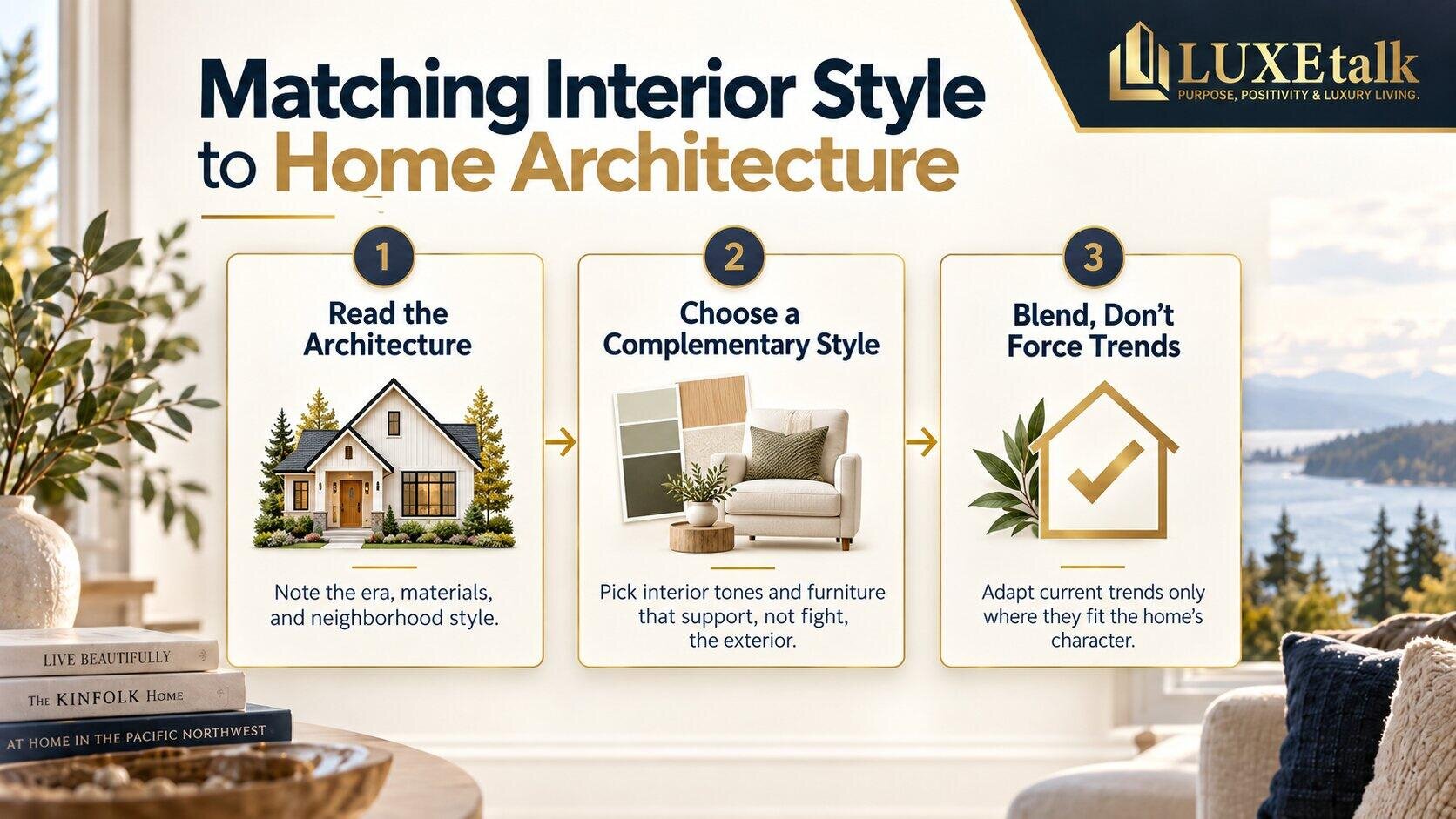
If you’re not sure which direction fits your property, Michelle’s interior design portfolio shows how she’s handled that balance across different home styles.
My team and I walk sellers through this same idea of matching presentation to what a home is actually like to live in
Designing Short-Term Rentals That Feel Local, Not Generic
Vacation rentals come with their own rules. Michelle currently manages properties in Cle Elum, West Seattle, and Leavenworth, and each one needs a different vibe suited to its location.
Durability matters more here than in a typical staging job. Rugs need to hold up to heavy foot traffic, pillow covers need to be washable, and artwork needs to survive guests who are, in her words, harder on furniture than most homeowners expect. She’s found that bringing in local touches, like Seattle photography or regional food and drink, adds a memorable detail without needing to be expensive. That’s the kind of short-term rental design thinking that separates a forgettable Airbnb from one guests remember.
It’s also worth noting how this connects to increase home value conversations sellers have with me directly. A short-term rental that’s styled with longevity in mind holds its resale value better than one filled with trendy, disposable pieces that wear out fast.

For hosts thinking about turning a property into a vacation rental, Michelle’s Airbnb styling work shows several examples of how she’s approached that local character.
What This Stager Learned About Creating Spaces That Actually Feel Peaceful
Michelle’s biggest takeaway from fifteen years in the industry isn’t about what’s trending. It’s about what lasts. She steers most clients away from chasing whatever’s popular that season and toward pieces that will still feel right in ten years, which lines up directly with timeless design choices.
She shared one of the more emotional moments from her work recently:
“But this isn’t exciting, but it’s very practical. So any pillows that I bring in, the covers need to come off so you can wash them. Well, they don’t necessarily last as long. So it is a lot like staging except that it’s got to have longevity or it’s got to be replaceable. People are hard on things. I mean, I didn’t realize how hard people would be on things, you know? I didn’t even do very much in their home because they have a very specific style and they’re staying with two dogs, so there wasn’t a whole lot I could do. But after I left, she said, ‘I just feel so peaceful.’ And I will tell you this much: she’s not well. And I almost cried because I thought that meant so much to me that her space now feels peaceful to her. After all, that means everything to me. It’s not an expensive home. It sold in the first few days, which is a big deal right now. But for her, she said she just kept looking at certain artwork I had brought in and that she just felt very calm and peaceful. And that’s some of the best feedback I’ve gotten all year. It meant so much to me, you know, and they knew that I took the extra time to make it that way as best I could.”
That’s the part of this work that doesn’t show up in a listing photo. Michelle also talked about the emotional weight of staging homes during divorce, illness, or financial hardship, and how much it means to her clients when she treats their space with care instead of just executing a checklist.
If you’d like to see more of the finished spaces she’s referring to, her portfolio gallery includes several completed projects, and you can follow her ongoing work on Instagram or connect with her on LinkedIn.
Want to hear my entire conversation with Michelle Golay of Faith Design about staging, styling, and the small design choices that help a home sell? Listen to our podcast episode!
FAQ Section
What is home staging and how is it different from interior design?
Staging prepares a home to appeal to the widest range of potential buyers, usually with an eye toward a quick, profitable sale. Interior design is built around one household’s long-term taste and daily life. Michelle works in both worlds, but she treats them as separate skill sets with different goals.
How much should homeowners spend when staging a home for sale?
Michelle’s advice is to spend more on pieces you can reuse, like quality pillows or lamps, and less on one-off items that only fit a single house. Sofas and chairs are usually worth the investment. Side tables and small accessories usually aren’t.
What design trends are shaping home staging and resale value right now?
Color drenching and moody, old-world palettes are gaining traction, alongside a shift away from all-neutral, alabaster-toned interiors. Michelle expects timeless choices, not trend-chasing, to keep winning out for resale value.
Apply As A Guest On The LUXEtalk Podcast
Real estate, design, and luxury living are constantly evolving. If you have insights, expertise, or a story that would resonate with our audience of agents and industry professionals, I’d love to hear from you.
Conversations like the one I had with Michelle remind me that the best insights often come from people who’ve spent years perfecting their craft in the field, not just talking about it. If that sounds like you, I’d love to have you on the show to share what you’ve learned.