

If you have built something worth protecting, a portfolio of luxury property, a growing business, or a name people recognize, you have probably felt the quiet cost of success. The more you own, the more you have to lose, and the more attention you draw. That is exactly why I wanted to have this conversation. On this episode of LUXEtalk, I sat down with Hillary Johns, a Trial Lawyer, to walk through the safeguards most owners overlook until a problem is already at the door.
Hillary is a trial attorney and the founder of her own firm, with more than 100 cases taken to verdict across California and New York. She is the attorney people call when a case is actually going to trial, which means she sees the failure points most business owners never plan for. Her focus is civil litigation, employment law, and business disputes, and she spends as much time preventing problems as she does arguing them.
Here is what you will take away from our conversation:
- Why a trial attorney matters long before you ever see a courtroom
- The due diligence and privacy steps most luxury buyers skip
- The employment and intellectual property protections that guard your business from the inside
- The real limits of an NDA, and what is not actually confidential
- The one-page risk management checklist you can start using this week
Check out the highlights here:
Why I Had This Conversation With Hillary Johns, a Trial Lawyer

In luxury real estate, I meet people who assume that success protects them. Hillary’s entire point is the opposite. Success makes you a target.
She has taken more than 100 cases to verdict, and she is the firm people reach for when a matter is genuinely headed to court. That vantage point matters, because she sees the exact places where owners get exposed, long before most of us would think to look.
According to Hillary Johns in this episode, she has taken more than 100 cases to verdict.
Her framing of the stakes stayed with me. As she said in the podcast, if you have financial means, “there are scammers, there are con artists, there are people who are going to want to take that.” That reality is what this whole conversation is built around.
Watch the full conversation here:
Why Every Business Owner Needs a Trial Attorney (Before the Litigation Starts)
The biggest shift in how I think came early in our talk. A good lawyer is not only for the courtroom. Often the real work is preventing litigation before it ever starts.
Hillary described the trap I see all the time in deals. The energy of a new partnership is exciting, everyone is optimistic, and the handshake feels like enough. Then the backside nobody mentioned shows up. Accounts get emptied, client lists walk out the door, and someone claims your idea was theirs all along.
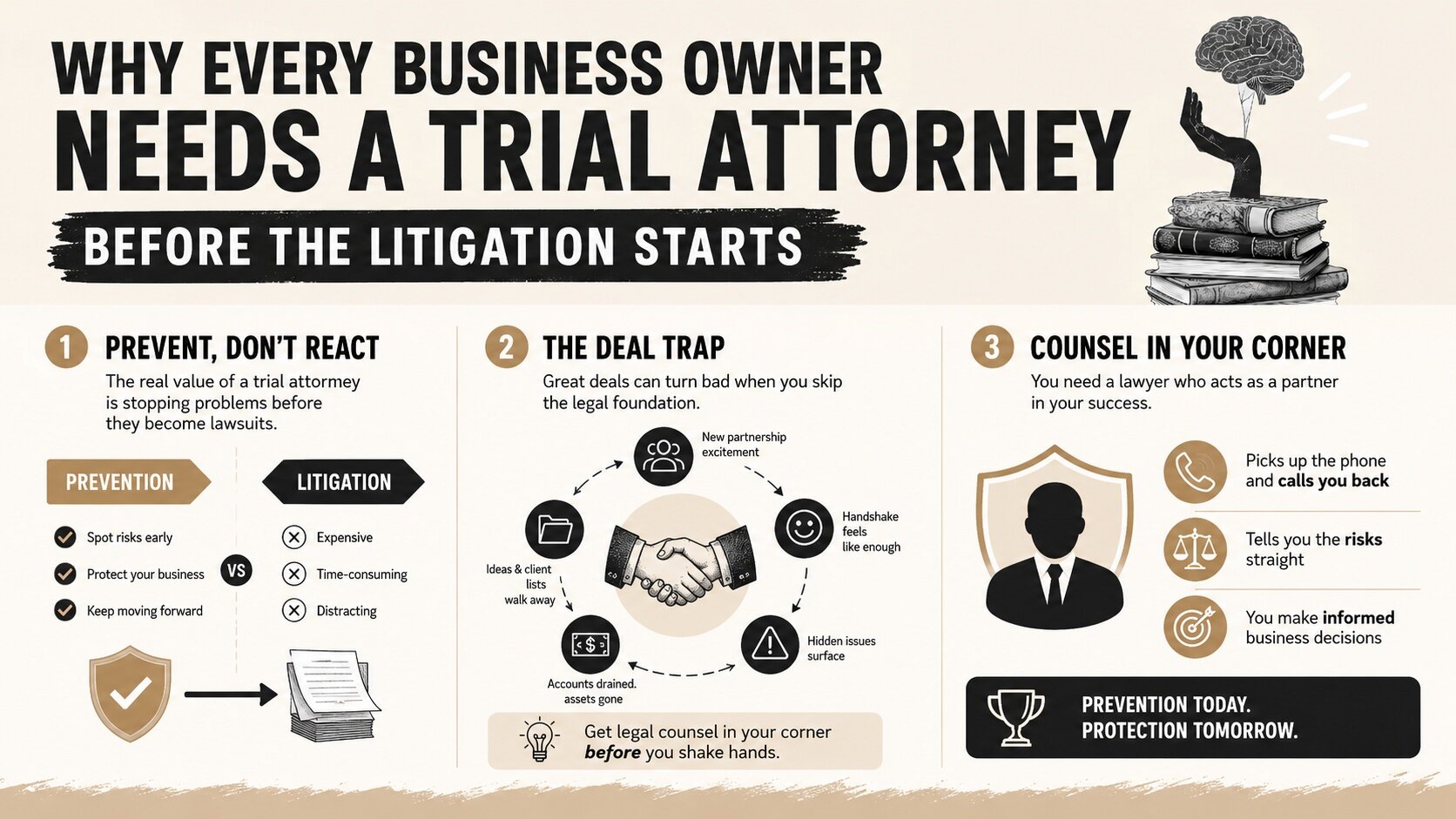
What you want, she explained, is counsel who is genuinely in your corner. Someone who picks up the phone, calls you back, and tells you the risks straight so you can make your own business decision. That is a trial attorney for business owners working as prevention, not just defense.
When you’re running your own business, Lisa, you need to be out there marketing, being seen, making deals, producing your product, whatever that is. And you don’t have time to sit there and worry about the legalities. You need someone who’s going to tell it to you straight, tell you what the risks are, let you assess it, and you can make your own business decision. — Hillary Johns, Founder & Managing Partner, Hillary Johns, Trial Lawyer
That same preventive mindset applies the moment you start buying property.
Due Diligence and Privacy When You Buy Luxury Real Estate
When I asked Hillary about the biggest oversight investors make with high-end property, her answer was direct. They skip real due diligence on the asset before they buy. History, zoning, and restrictions all matter, and they are easy to miss when you are excited about a place.
Some of those restrictions surprise even seasoned buyers. HOAs and local ordinances can cap how much of a property you are allowed to sell at one time. In places like Palm Springs, buyers who loaded up on homes during the pandemic later found new limits on short-term rentals like Airbnb. Older and historic buildings carry their own risk. A romantic property can quietly become a money pit if you cannot renovate or rebuild the way you assumed.
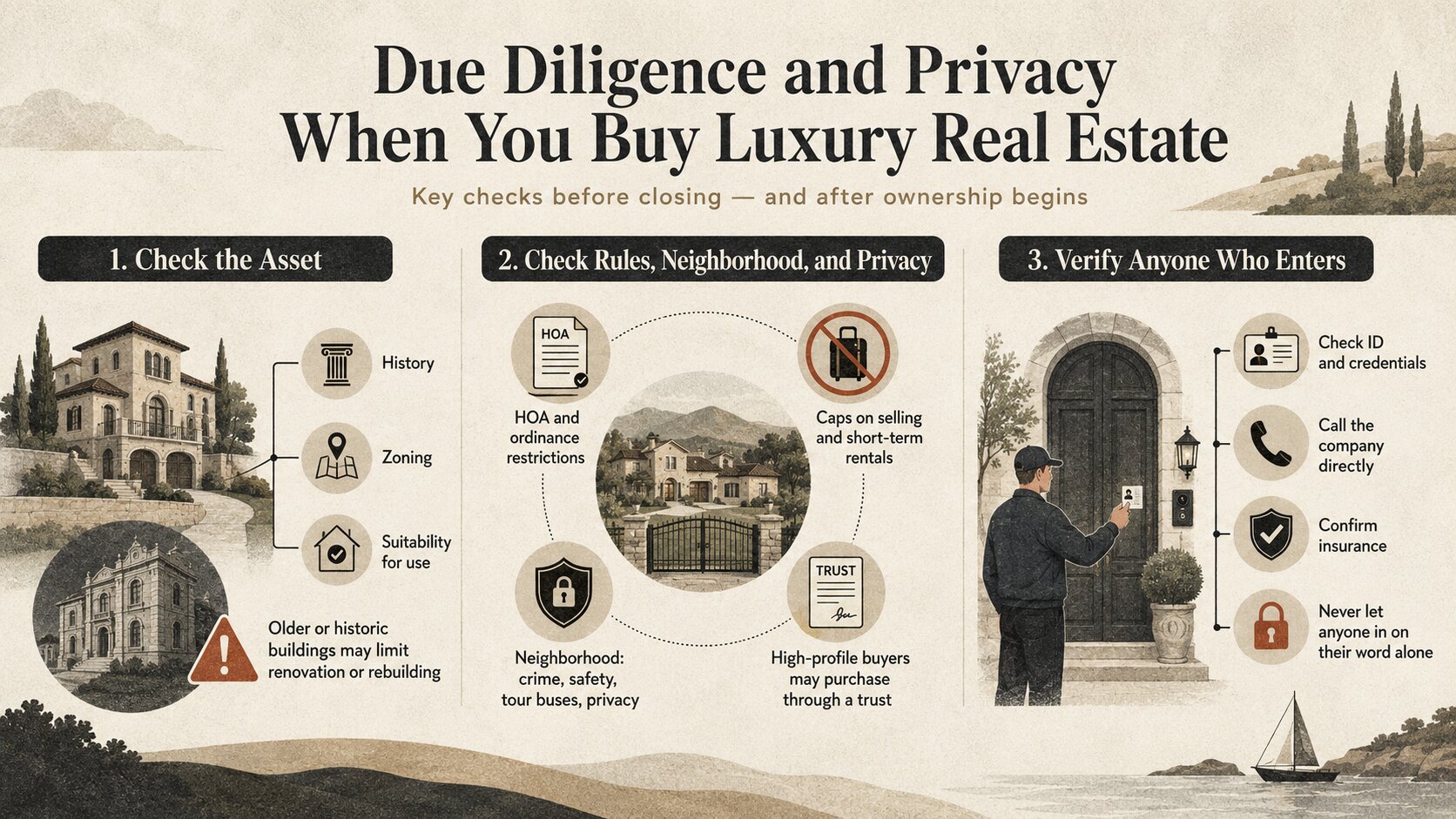
Before you buy, Hillary’s guidance points to a few non-negotiables:
- The asset’s history, zoning, and suitability for how you plan to use it
- HOA and ordinance restrictions, including caps on selling and short-term rentals
- The neighborhood itself, from crime and safety to tour buses and privacy
- Privacy structuring, since high-profile buyers often purchase through a trust to keep their name off the record
This is where solid luxury real estate legal protection really starts, well before closing. It is the same discipline I bring to the way I guide real estate buyers through the property search process, whether someone is weighing a waterfront estate or one of the luxury properties across Whatcom County.
Hillary also flagged a security risk that has nothing to do with the purchase itself and everything to do with who you let through the door.
Make sure you check people’s ID and credentials. I have seen this scam where wealthy people come in and they’re buying a home, or they have a property manager, and someone else comes later and says, “Oh, we’re going to fix your whatever it is.” This is a very common scam and they can go right in. They’ll grab your jewelry, they’ll grab whatever, and they’ll clean you out. — Hillary Johns, Founder & Managing Partner, Hillary Johns, Trial Lawyer
Her rule is simple. Never let anyone in on their word alone. Verify the ID, call the company directly, and confirm they carry insurance, even when it is the cable guy. Once you own the asset, the next exposure comes from inside your own business.
Protecting Your Business From the Inside: Employment, IP, and Your Brand
Hillary walked me through the protections that hold a growing company together, and most of them start with paperwork people treat as an afterthought.
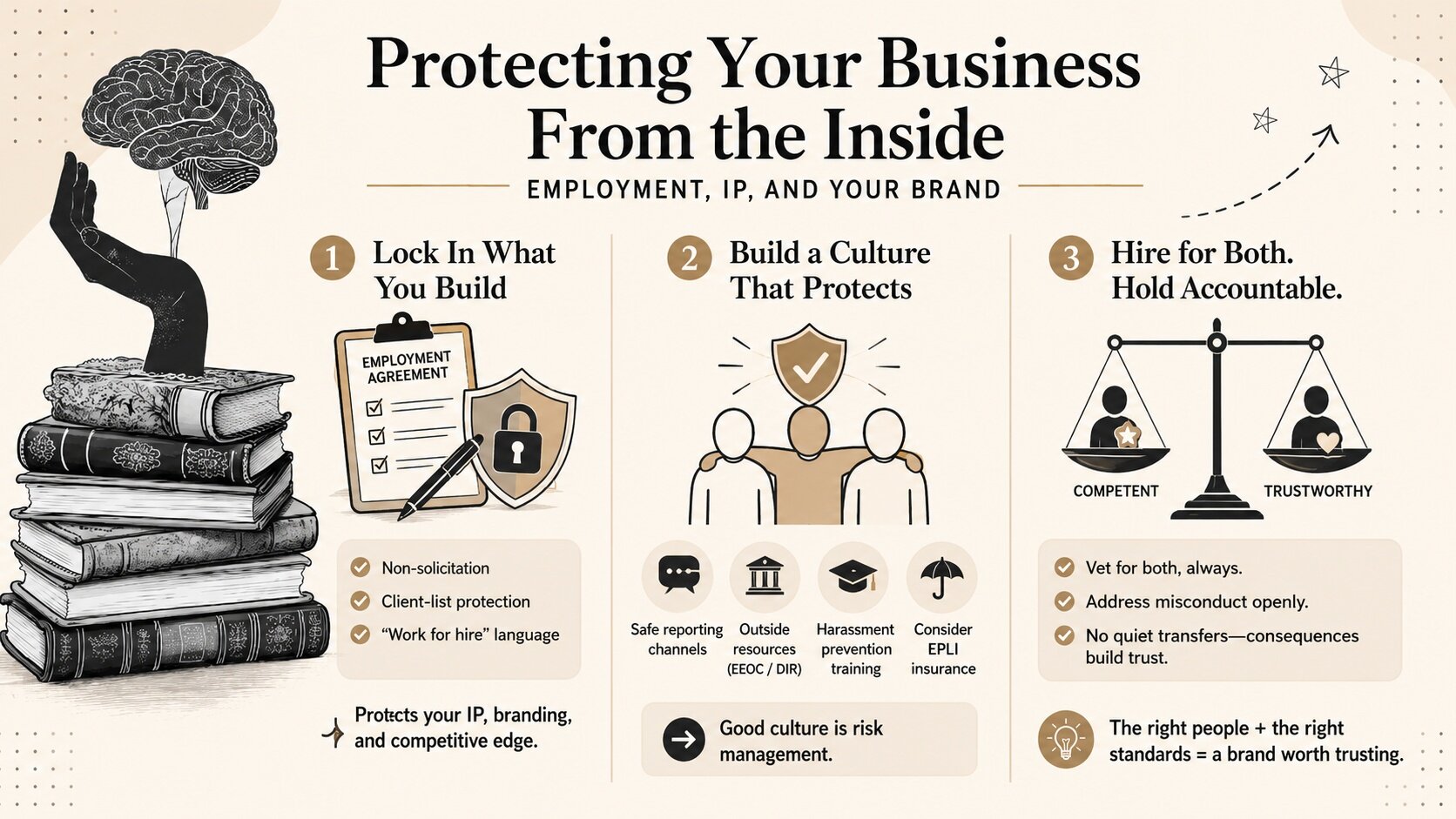
Employment agreements are the foundation. Non-solicitation terms, client-list protection, and “work for hire” language keep the ideas, logos, and branding developed on your dime from walking out with an employee. This is the core of protecting intellectual property and brand as you scale, and it is far cheaper to set up than to litigate.
She was candid about the limits of an NDA. It can help as you grow, but it will not shield illegal conduct and can be voided in that context. Just as important, what you tell a business manager, publicist, or assistant generally is not privileged. Those conversations can come back to find you.
Culture is its own form of risk management. These employment law protections for businesses are the difference between a bad situation handled well and a lawsuit you did not see coming:
- Give people a safe place to report a complaint, not just a boss who may be the problem
- List outside resources like the EEOC and the California Department of Industrial Relations
- Require harassment-prevention training, which is inexpensive and easy to miss
- Seriously consider EPLI, employment practices liability insurance
Hillary was blunt about handling misconduct, too. Quietly transferring a bad actor tells everyone watching that there is no consequence, and as she noted, the witnesses are victimized too. One line stuck with me as a hiring filter: being competent does not mean someone is trustworthy, and being trustworthy does not mean someone is competent. You vet for both. It is the same standard I hold when I build the kind of luxury real estate team clients can actually trust. All of this changed how I think about protection, and it pointed to one simple habit.
What Changed for Me After This Conversation
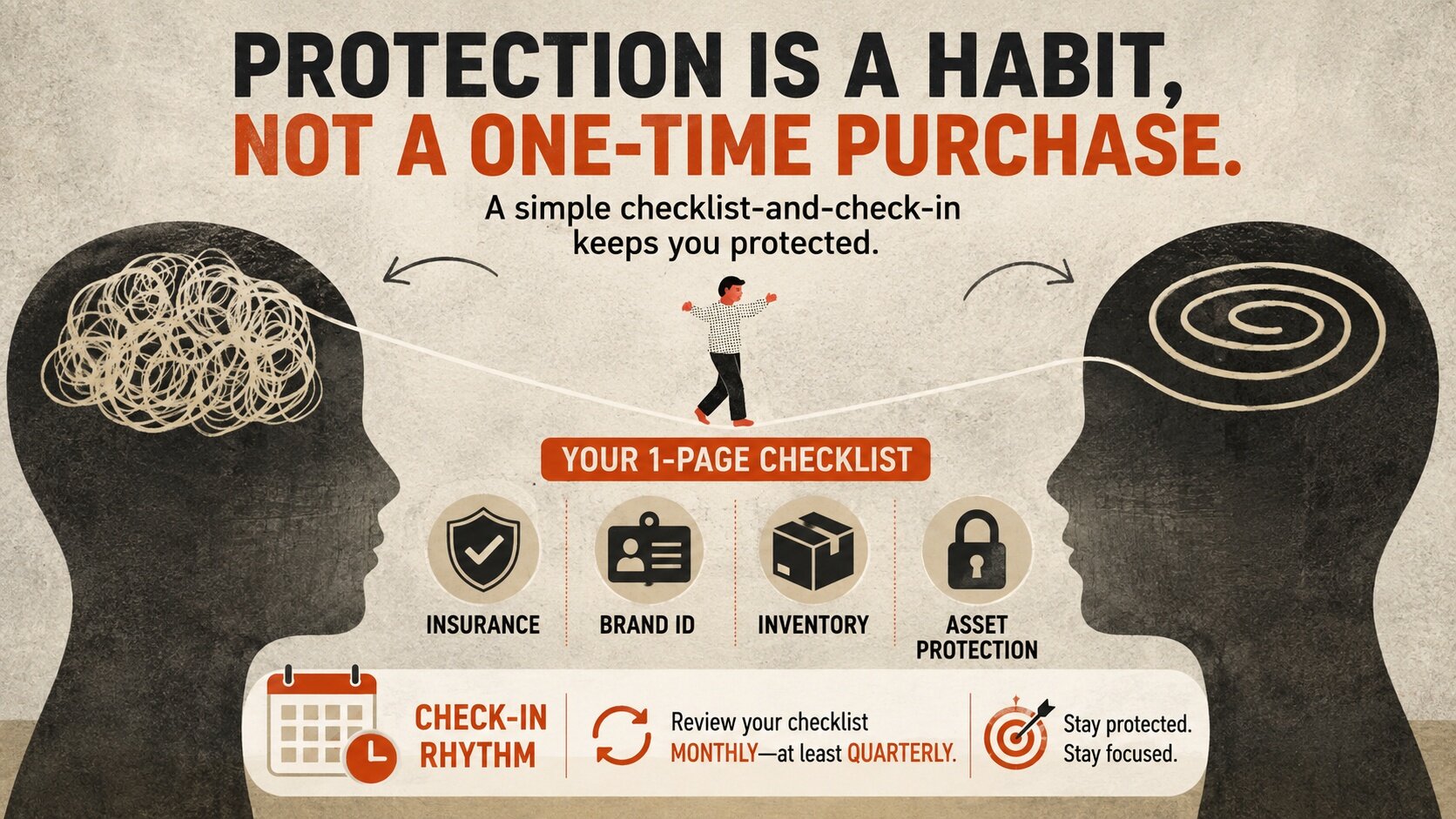
My biggest takeaway is that protection is not a one-time legal purchase. It is a habit you maintain, and the simplest version fits on a single page.
I used to see legal work as something you call in during a crisis. Now I see the checklist-and-check-in rhythm as the actual protection. For me that looks like a recurring self-audit across a few categories: insurance, brand ID, inventory, and asset protection.
You need to have a list, one page, a list of what you need to do, and you need to refer to it constantly. You should have a check-in with yourself and your business. So have a list like insurance, brand ID, inventory, asset protection. — Hillary Johns, Founder & Managing Partner, Hillary Johns, Trial Lawyer
Hillary recommends reviewing that risk management checklist at least quarterly, and ideally monthly. It is a small ritual, but it keeps your protection current instead of letting it drift while you are busy building. That is the practical gift Hillary Johns, Trial Lawyer, left me with, and it is the reason this conversation stuck.
FAQ Section
Do I really need a trial attorney if I never plan to go to court?
Yes. Much of the value is preventive. The right counsel spots risk in your deals, agreements, and insurance before a threat ever turns into litigation.
What is the single biggest mistake buyers make with luxury real estate?
Skipping due diligence. That means not checking the asset’s history, zoning, HOA or ordinance restrictions, and the surrounding neighborhood before they purchase.
Will an NDA protect my confidential information?
Only so far. An NDA can help as you grow, but it will not protect against illegal conduct and can be voided in that context. What you share with non-lawyers, like business managers, publicists, or assistants, generally is not privileged.
How do public figures protect their image and IP online?
Make the website ADA compliant, mark photos as protected property on every page, use overlays or widgets that make images hard to download, and document and date original ideas, scripts, and content as evidence of ownership.
Keep the Conversation Going
If you want experienced legal guidance for protecting your business, brand, intellectual property, and real estate, follow Hillary Johns.
Hillary Johns, Trial Lawyer:
Website → hillarytriallawyers.com
LinkedIn → https://www.linkedin.com/in/hillary-johns-80519483/
Facebook → https://www.facebook.com/p/Hillary-Johns-Trial-Lawyer-100057623552050/
Instagram → https://www.instagram.com/hillaryjohnstriallawyer/
Follow me at LUXEtalk and stay part of the conversation.
Website → lisabergrealestate.com
LinkedIn → https://www.linkedin.com/in/lisa-berg-13489565/
Facebook → https://www.facebook.com/lisabergrealestate
Apply as a Guest on the LUXEtalk Podcast
Luxury is evolving, and wealth is being tested in new ways. The owners who thrive are the ones who build protection before problems arrive, which is exactly what I took from my conversation with Hillary Johns, Trial Lawyer.
If you work at the top of your field, in law, real estate, business, or brand-building, and you solve real problems for high-net-worth clients, I would love to hear from you.