Maybe you have sensed for a while that something in your relationship is off, but every time you try to name it, you talk yourself out of it. There are no bruises to point to, no single moment you can hold up as proof. That quiet, exhausting doubt is exactly what my conversation with Christine Dillard on The Truth She Showed Me set out to put into words.
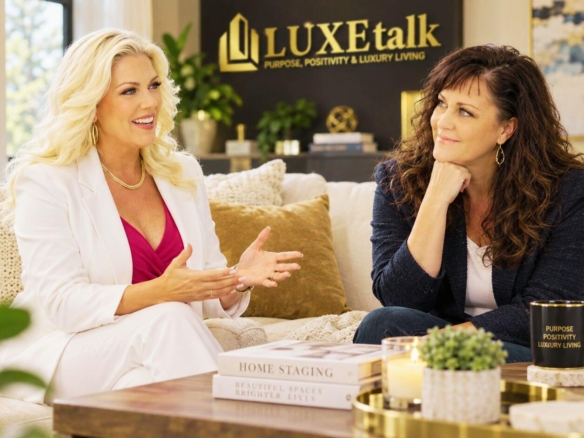
I host LUXEtalk because I believe the most elevated conversations are the honest ones, and I do not shy away from the hard subjects. I have come out of controlling relationships myself, so I am not speaking about this from a distance. Alongside these conversations, I lead a luxury real estate team in Whatcom County, but the reason people trust me here has nothing to do with a title. When my guest describes the fog of covert psychological abuse, I recognize it, and I wanted to give that experience language for anyone quietly living it right now.
In this article, I will walk you through what stood out most from our conversation:
- Why coercive control is so hard to see, and how it differs from what we usually call abuse
- Why “just leave” is never as simple as it sounds
- How your body signals danger before your mind will admit it
- The quiet, strategic work of building a safe exit
- What speaking the truth out loud changed for me as a host and a leader
Check out the highlights here:
Why I Had This Conversation With Christine Dillard, Author of The Truth She Showed Me
I did not want this episode to feel like a diagnosis. I wanted it to feel like validation. If you are quietly asking yourself whether it was really that bad, I want you to know the question itself is worth exploring, because I asked it too, for years.
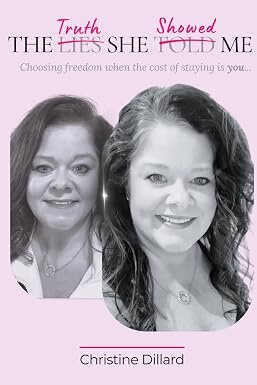
Christine Dillard is a Fortune 500 director and the author of the debut memoir The Truth She Showed Me. She spent 17 years in a marriage marked by covert abuse, then turned her healing journey into a book built to help others recognize the pattern from the inside and the outside. That lived experience is why I trust her to lead this conversation.
According to the National Coalition Against Domestic Violence, 1 in 4 women and 1 in 9 men experience severe intimate partner violence, including contact sexual violence and stalking, with lasting impacts like injury and post-traumatic stress.
Watch the full conversation here:
Coercive control is a pattern, not a single incident, and that is where the confusion begins. The CDC found that 27.2% of U.S. women had experienced at least one form of coercive control and entrapment by an intimate partner during their lifetime.
That makes coercive control far from an isolated or unusual experience, even when there are no visible injuries.
The Abuse You Can’t See: Coercive Control vs. Traditional Abuse
When most of us picture abuse, we picture something physical. Bruises. Broken bones. A threat you could repeat to someone else. Coercive control does not work that way, which is what makes it so hard to name.
As Christine explained in the episode, it is a sustained pattern that installs fear and slowly reshapes how you behave.
Two mechanics show up again and again:
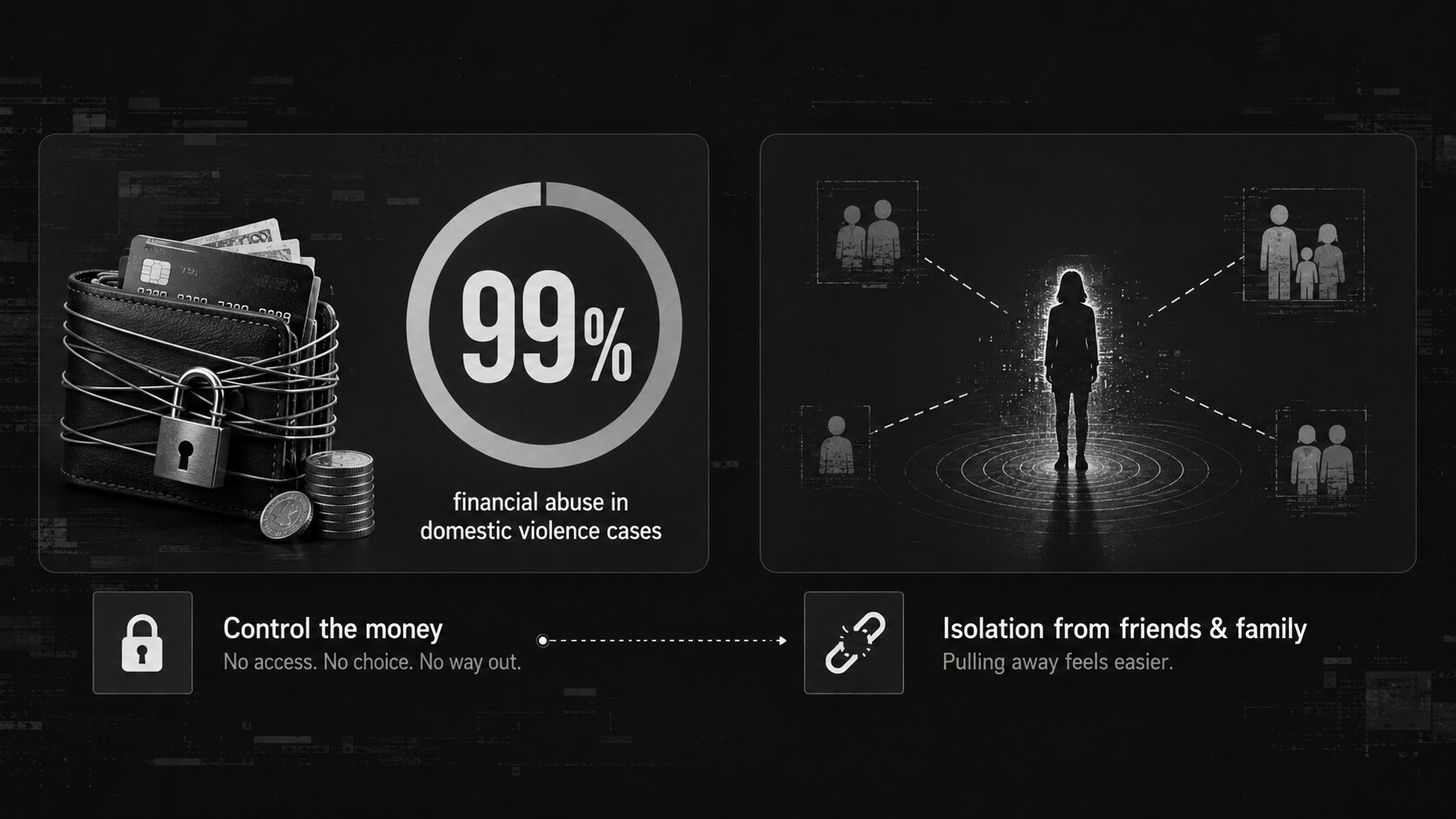
- Controlling the money, so you cannot picture a way out. The National Network to End Domestic Violence reports that financial abuse occurs in 99% of domestic violence cases, making it one of the main mechanisms that keep control firmly in place.
- Isolating you from friends and family, until pulling away feels easier than the fallout
“A lot of times when we talk about traditional abuse, it is physical in nature. At least that’s how we recognize it, right? It’s bruises, it’s broken bones, it’s threats about harming a person. Whereas coercive control ends up being this pattern of behavior that creates and instills fear or harm in a person, and over time that creates really lasting effects and impacts.” — Christine Dillard, Fortune 500 Director & Author of The Truth She Showed Me
| Traditional Abuse | Coercive Control | |
| Visibility | Physical and visible, like bruises or broken bones | Covert and slow, one of the hardest forms to see |
| Evidence | Often leaves marks others can point to | Usually “he said, she said” unless it was written down |
| Tactics | Physical harm and direct threats | Controlling finances and isolating you from friends and family |
| Long-term impact | Physical injury | Lasting effects, including complex PTSD |
A missing bruise does not mean nothing happened, and once you see that, the next question answers itself.
Married to Hope: Why “Just Leave” Is Never Simple
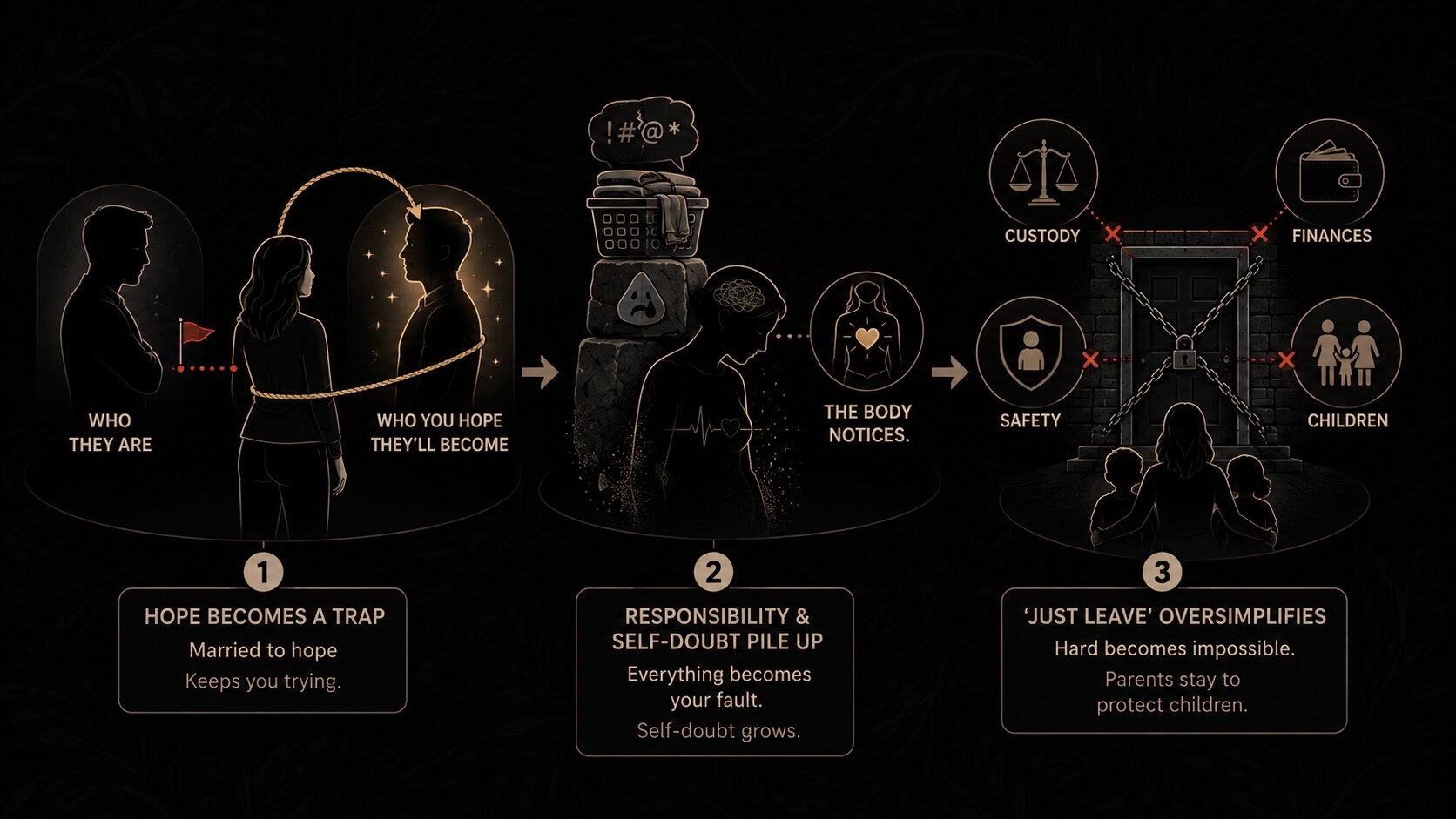
Everybody’s favorite question, as Christine put it, is why you didn’t just leave if it was that bad. Her answer stayed with me: you do not marry the person in front of you. You marry the person you hope they will become, and that hope keeps you trying long after the red flags appear.
“I married hope, the person I hoped he’d be, not the person he was. And repeatedly he showed me the person he was, and I wasn’t willing to accept that because I thought I could fix him. I thought I could help him. And the reality of that is not true.” — Christine Dillard, Fortune 500 Director & Author of The Truth She Showed Me
Over time, you absorb responsibility for everything, from the arguments to the laundry, and you lose your sense of self. Leaving stops feeling hard and starts feeling impossible, especially with children involved. As Christine shared in the podcast, she waited until her youngest turned 12, the age her state may weigh a child’s preference in custody, because losing a 50/50 custody battle would mean she could no longer protect her kids full time.
That is why parents stay.
- Hope becomes a trap when it keeps you invested in who someone might become
- “Just leave” ignores custody, finances, and safety, the real reasons people stay
- That constant self-doubt does real damage. It is also where the body becomes your most reliable witness.
When Your Body Knows Before Your Mind Does
This is the part of our conversation I keep coming back to. When someone has spent years pushing a different version of reality onto you, you stop trusting your own mind. Christine’s answer was to trust her body instead, and to read those somatic trauma signals as data.
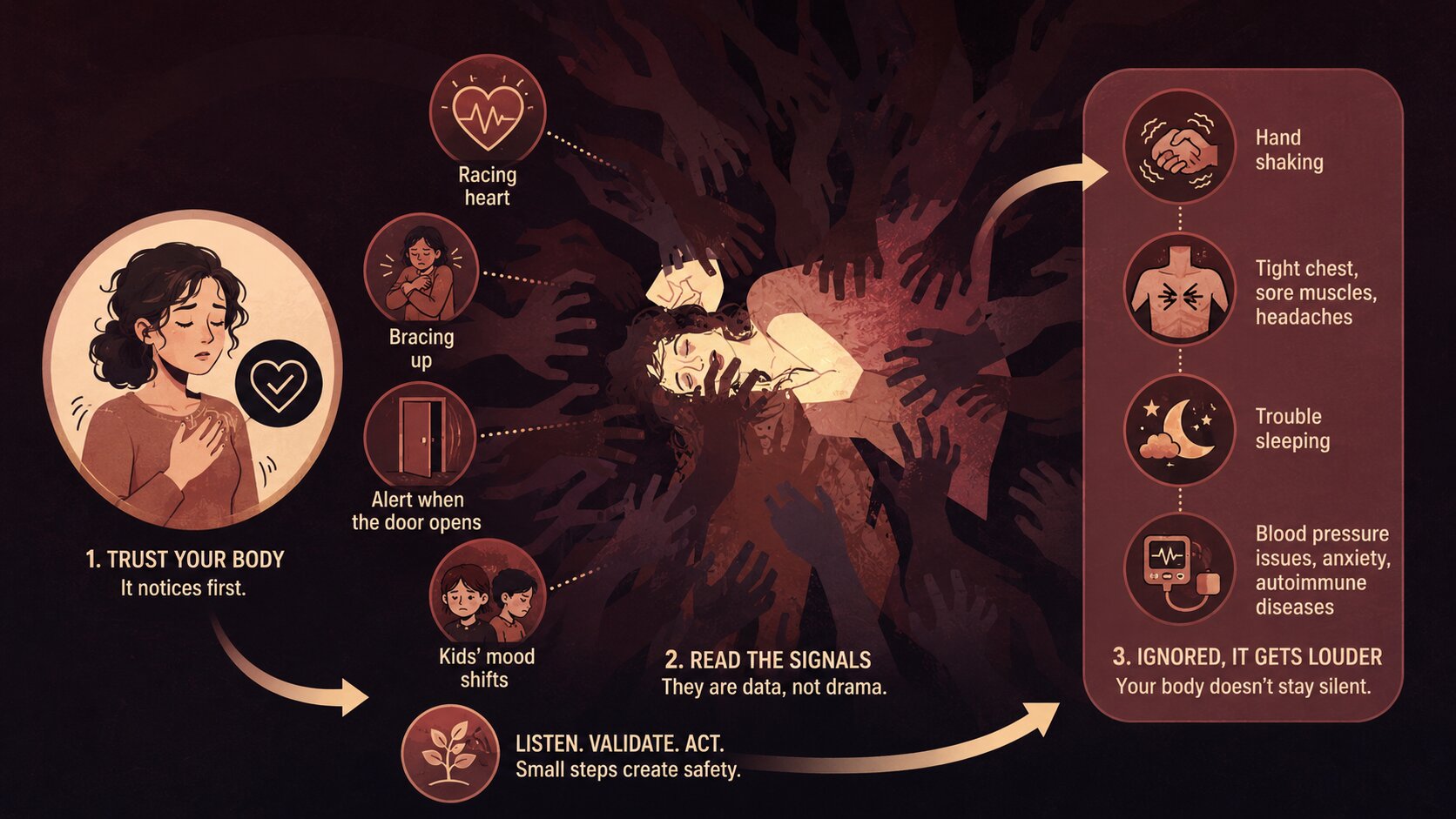
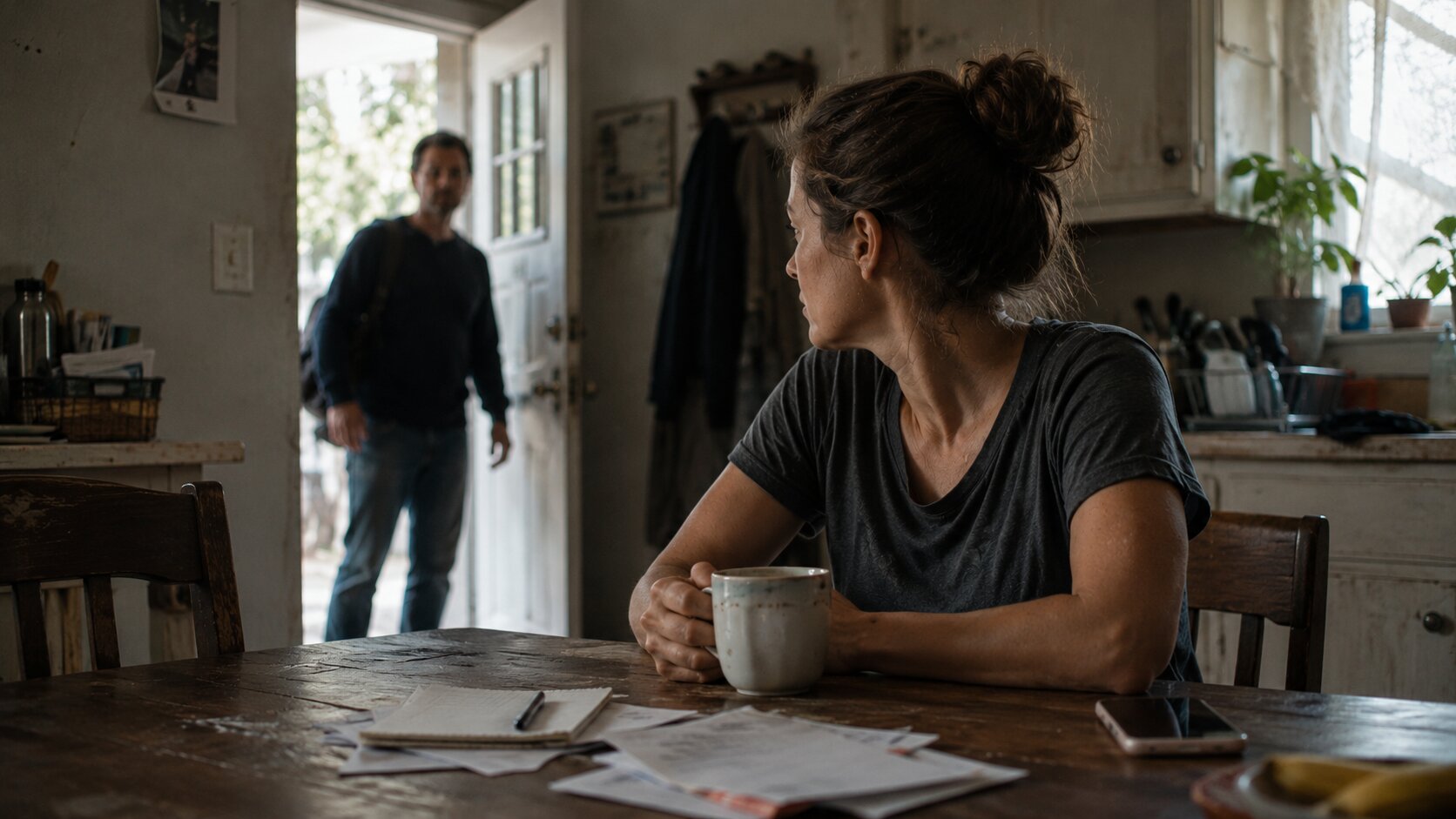
Her heart racing when a voice was raised. The way she braced when the door opened. The way her kids’ whole demeanor shifted depending on who was home. These were tangible, and there is research to back them up, which gave her the validation she needed when her own thoughts had been undermined.
“If you are not listening to your body today, your body will start getting louder. It starts with hand shaking. It starts with racing. It starts with a tight chest and sore muscles and a headache and not sleeping well. And it evolves into things like blood pressure problems and anxiety, sometimes autoimmune diseases.” — Christine Dillard, Fortune 500 Director & Author of The Truth She Showed Me
Ignored, the body does not go quiet. It gets louder. Once you can trust that signal again, you can start to act on it, carefully.
Building a Silent Exit Strategy
If you recognize yourself in any of this, an exit strategy from an abusive relationship starts with one quiet, powerful habit: documentation. As Christine shared in the episode, the how matters as much as the what.
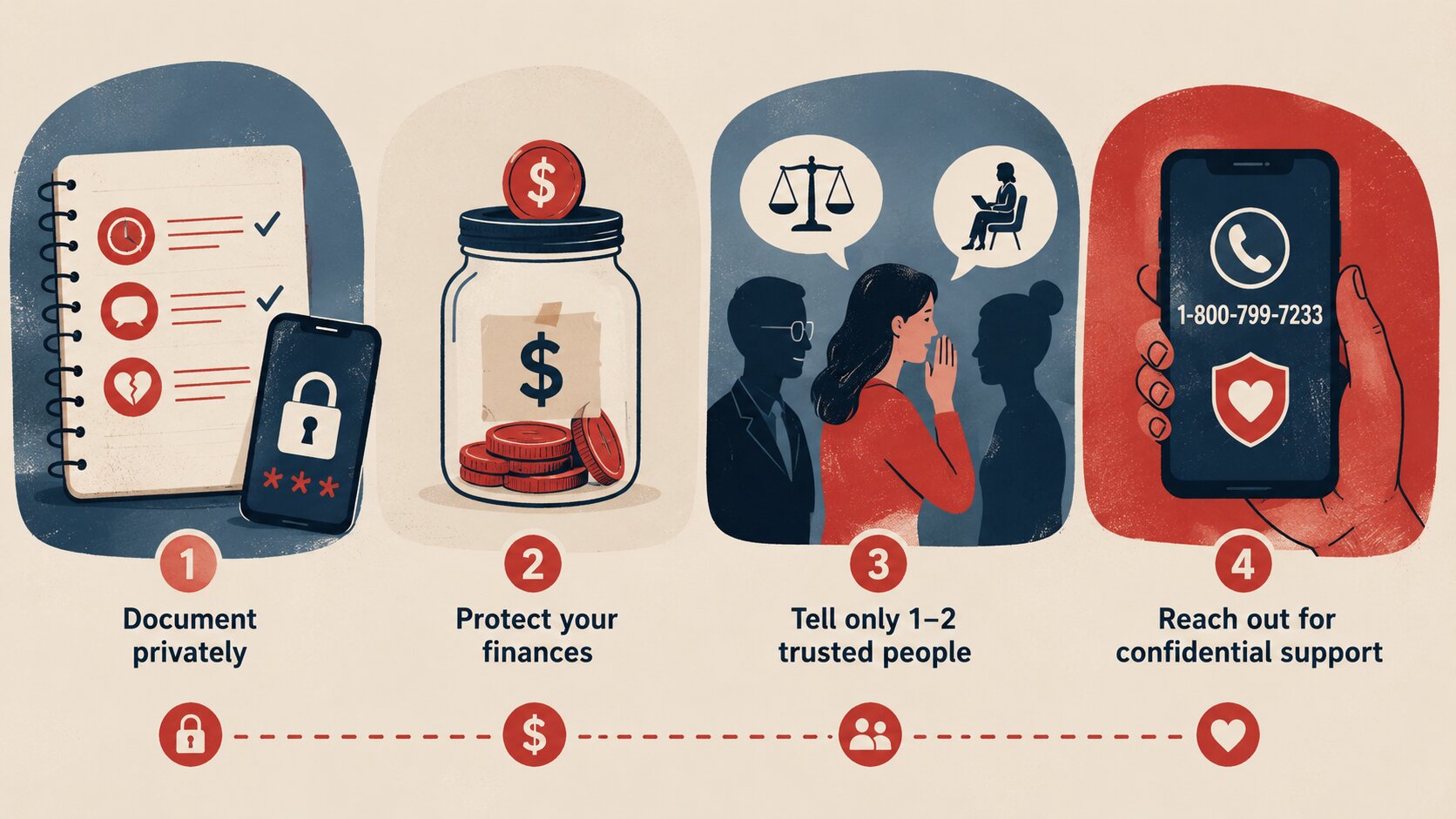
1. Document Privately
Document the behavior privately, in a hidden app or a notebook they cannot access, even the small things, because the pattern is the evidence.
2. Protect Finances
Protect your finances, tucking away small amounts wherever you can.
3. Keep Things Private (For Now)
Tell only one or two people. For Christine, that was a lawyer and a therapist. Everyone else found out when she filed.
4. Ask For Help
Reach out to confidential support. The National Domestic Violence Hotline (1-800-799-7233) and local advocates can help without anyone else knowing.
There is real power in a plan, even one you cannot act on for years. As Christine put it, telling yourself “I am going to leave” is one nugget of empowerment, and it multiplies with every five dollars saved and every decision you make for yourself instead of for him.
A plan you cannot act on yet is still power, and building it changed more than Christine’s safety. It changed how she leads.
What Changed for Me After This Conversation
Christine described living a dual reality, a corporate persona from 8 to 5 and a hidden home life the rest of the time. When she finally named it publicly on LinkedIn, it set off a chain reaction of people in her network sharing stories they had never told anyone.
What stays with me is what that vulnerability did for her leadership. It did not weaken it. It added a humanity she had kept guarded for years, and speaking the uncomfortable thing out loud is what makes it real enough for someone else to act on. That is part of healing after coercive control, both for the person telling the story and for the ones who finally feel less alone.
I am more convinced than ever that platforms like this one exist so people feel less alone, so one honest story can hand someone the nugget they need to leave. That is exactly why I sat down with Christine Dillard for The Truth She Showed Me.
FAQ
What is coercive control?
It is a sustained pattern, controlling finances, isolating you from friends and family, and instilling fear, meant to dominate a partner. Unlike physical abuse, it often leaves no visible evidence, which is what makes it so hard to prove.
How is coercive control different from “traditional” abuse?
Traditional abuse is typically physical and visible. Coercive control is covert and cumulative, showing up as manipulation, isolation, and financial restriction that erode autonomy over time, often producing lasting effects like complex PTSD.
Why don’t people just leave abusive relationships?
Leaving is rarely simple. Manipulation, financial dependence, isolation, and most powerfully the fear of losing custody and the ability to protect your children keep people in place, sometimes for years, while they plan a safe exit.
What are the first safe steps to take?
Start documenting the behavior privately and securely, reach out to confidential resources like the National Domestic Violence Hotline (1-800-799-7233), and confide in only one or two trusted people, such as a lawyer or therapist.
Where can I learn more or find community?
Christine shares resources under The Truth She Showed Me across her social platforms, and following survivor communities, even as a silent observer, can offer validation and a starting point.
Keep the Conversation Going
If you want support and insight on recognizing coercive control, rebuilding self-trust, and healing after psychological abuse, follow Christine Dillard:
- LinkedIn → linkedin.com/in/christinedillard
- Facebook → facebook.com/ChristineDillard04
- Instagram → instagram.com/thetruthsheshowedme
- Book → https://www.amazon.com/Truth-She-Showed-Me-Choosing/dp/B0GV8C8Q9X
If something in this episode made you think, question, or reconsider, don’t let it stop here.
Follow LUXEtalk and stay part of the conversation. Follow Lisa Berg:
- Website → lisabergrealestate.com
- LinkedIn → linkedin.com/in/lisa-berg-13489565
- Facebook → facebook.com/lisabergrealestate
Beyond the mic, I lead a luxury real estate team in Whatcom County, helping buyers find their next home and guiding sellers into their next chapter, with listings across Bellingham, Lynden, Ferndale, and beyond.
Apply as a Guest on the LUXEtalk Podcast
Conversations like this one are the reason LUXEtalk exists. The most powerful episodes come from guests willing to speak honestly about what they have lived and learned, and to turn something painful into something that helps someone else feel less alone.
If you are a leader, author, or expert with a story or an insight that could help our audience live more intentionally, and if you are a real estate professional ready to share what you know across the network, let’s spotlight your insights.