

On LUXEtalk, I sat down with Seth Phillips to talk about a corner of the market that still feels mispriced. Seth Phillips of ADU Gold matters here because his thesis is simple: when the law lets a lot carry more units and land prices haven’t caught up, disciplined builders get an opening.
What made this episode worth writing about is that Seth didn’t arrive at that thesis from theory. He got there through foreclosure flips, luxury construction, and one Culver City project that forced him to scrap a finished teardown plan and rethink what a lot could be worth.
If you want the full conversation, including the Culver City pivot, the multifamily thesis, and the law changes Seth thinks matter most, watch the complete episode below.
If you want to keep up with Seth’s work after this conversation:
If you want more from me and the market I serve:
Meeting Seth Phillips and the ADU Gold Origin Story
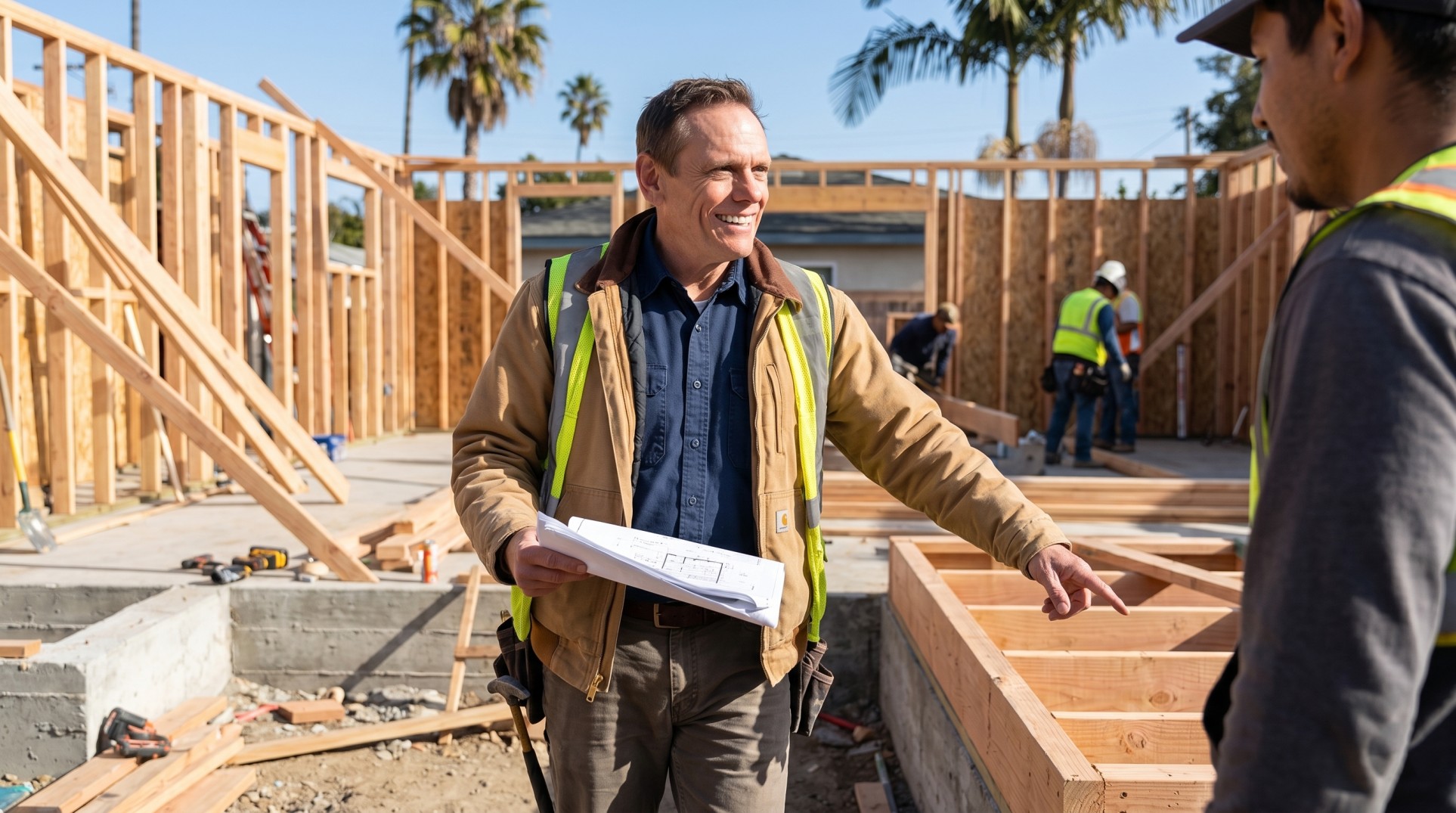
Seth’s background matters because he learned this business under pressure, not inside a branding exercise. He moved from brokerage into flips when 2007 knocked the floor out, then climbed from courthouse-step deals into high-end construction.
That is the kind of operating range I trust, and it mirrors why I value a team built from overlapping real estate, design, and construction experience when clients need advice that has to survive contact with reality.
He described that pivot bluntly.
“I went from having this great job that I loved that paid really well to being unemployed overnight. It was shocking. I was looking around for what else I could do while the market was hopefully going to heal. That’s when I went into the house flipping business.
We were buying properties on the courthouse steps in Los Angeles for $120,000, and then we would fix them up and sell them for $180,000. That was an important learning curve because I had to learn all about construction at that time.”
The Aha Moment That Scrapped a Teardown Plan
The Culver City deal is where Seth’s argument becomes concrete. He had a teardown plan in hand, heard about the ADU law at exactly the right moment, and realized the lot was worth more with a different approach.
What makes the story work is how clearly he still remembers the moment.
“Literally, almost the exact day the plans were finished, I was in the car with my business partner and we were driving to look at more property. All of a sudden, he told me about this new ADU law that had just gone into effect. This was one of those aha moments that you have in life where you not only remember the thing, but it’s so profound you remember everything about the moment that thing came into your head. I distinctly remember sitting in the passenger seat and looking out the window at the hill on the side of the car as we were driving. It left such an imprint that I immediately deep-dived into it.”
What ADUs Are and the History You Probably Didn’t Know
I liked that Seth stepped back and put ADUs in a longer history. California pushed the concept statewide, but he traced the lineage through Portland and Vancouver. If you want the formal rule book, the state keeps ADU guidance and implementation resources online. Seth’s value on the episode was translating those rules into real lot-level consequences.
His summary of that progression was useful:
“It was groundbreaking in that it took what was formerly single-family zoning—one living unit—and now you could have two. I did some research on where those ADU laws came from. California is not the first. The first it appeared was in Portland, Oregon. They were ahead of the curve, but it didn’t even start there. The first place I saw that it started was in Vancouver, Canada, where they’re called “laneway houses” because they call alleys “laneways” there.”
| Law shift Seth highlighted | Why it changed the game |
| 2017 statewide ADU expansion | Turned one-unit lots into two-unit possibilities |
| Junior ADU added the next year | Made three-unit configurations possible on many single-family properties |
| ADUs allowed on multifamily sites | Opened the door for owners already thinking like investors |
| New subdivision framework | Pushed the conversation from backyard additions to sellable lot-level density |
Why Multifamily Owners Became Seth’s Biggest Clients
This is where Seth’s free-land argument becomes practical. Multifamily owners moved faster because they already think in basis, hold strategy, and added doors. I see the same advantage when clients approach income property or second-home decisions with a real plan before they shop instead of trying to invent a strategy from the listing that happened to catch their eye.
His explanation of why multifamily owners moved first was convincing.
“This was perfect for them because in this environment, they still want to add to their portfolios, but the cap rates they’re looking at on the market are so challenging that there’s nothing out there they’re licking their chops at. Now they have an opportunity to build a unit on free land. It’s free because you already own it. There’s no land cost in the equation. If you can’t pay for the construction and then rent it out on free land, then you’re in the wrong place because that will work anywhere. That’s what they started to figure out.”
Up-Zoning Without Changing the Zoning Label
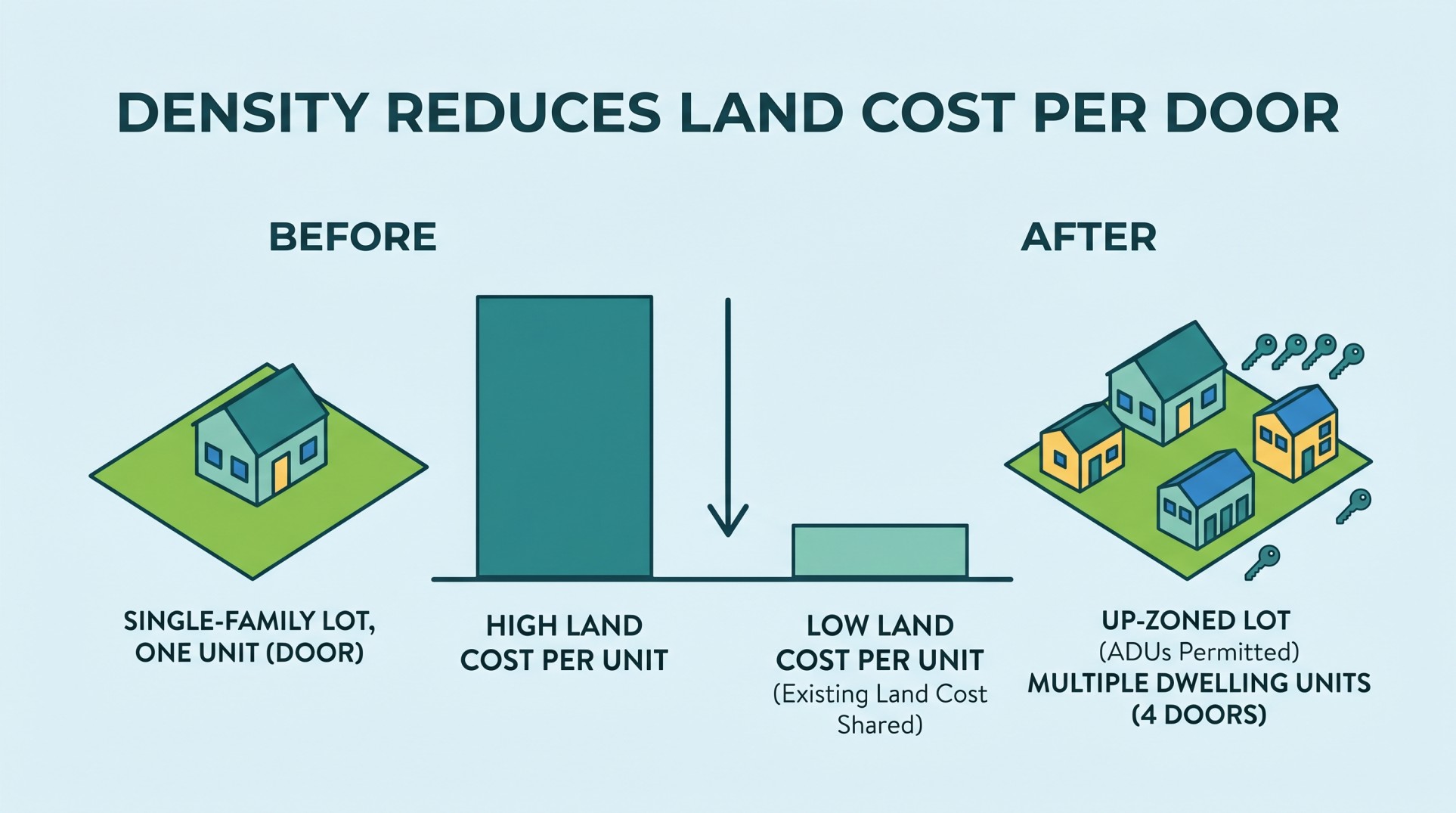
The point is simple: California changed what a lot can support without fully changing how buyers price it. Seth’s 20x comment matters because it forces you to look at land the way a developer would, in cost per door rather than old zoning labels. Mispricing usually starts when a buyer stares at the label instead of the use case, which is why I keep clients focused on the prep and planning that should happen before an offer ever gets written.
He put the pricing gap this way:
“The fact is that same piece of dirt is worth a lot more now, but we’re paying the exact same amount for it. We’re just buying a fixer-upper house at the exact same price it was before these laws. It hasn’t translated into that price yet, so that’s the secret value proposition that exists now. The simplest way to look at it is the price of land per door.”
The LA ADU Math, $300 to Build, $600+ to Sell
Seth’s math is what makes the case persuasive. If you’re deciding who to hire, the real question is whether the builder can explain where the margin comes from, where it disappears, and how long your money will be tied up.
He put the numbers plainly:
“The cost to build the ADU—and of course there’s no land cost—is just the cost of construction. Let’s put a number of $300 a square foot for construction, which is high, but that would cover it. If it costs you $300 a square foot to build and the value it creates is $600 a square foot, you can’t go wrong with that investment.”
The Build Process and the Honest Timeline
I appreciated how little theater Seth brought to process. He starts with the address, walks the site through Google Maps, and gives a quick read on size, constraints, and rough cost. For owners trying to hire the right ADU contractor in Los Angeles, that kind of first conversation matters more than a glossy rendering, and the city keeps its own ADU permit guidance online so people can separate municipal timing from contractor excuses.
He was just as direct about timing:
“We can usually get an ADU permit from the time we submit plans in five to six months, which is a chunk of time, but not horrible. The construction time is pretty standard, a little longer in Los Angeles because for every step of the construction process, once you finish that, you have to call up the city and they send out an inspector to make sure that work was done correctly. People I talk to are really irritated because of all this oversight, and I am too, because time is money. But there are really good reasons for that.”
The 10-Lot Subdivision Law and the First-of-Its-Kind Vertical Duplex
The conversation widened once Seth started talking about buyers. At that point, this stopped reading as an investor story and started reading as a housing-access story. He used a fixer plus an FHA 203(k) rehabilitation mortgage as one workaround, then pointed to a vertical duplex concept he thinks can give buyers another rung. That kind of problem-solving is what I want clients to hear, especially when they’re sorting through out-of-state buying and investment choices in Arizona before money gets committed.
What mattered was how quickly he moved from identifying the problem to sketching a solution.
“Where this really got me excited is that to take advantage of this on a normal size lot, you have to build vertical. We have designed a first-of-its-kind three-story vertical duplex. On the bottom level, you’ve got a small unit, and then the main living unit is the two floors above it. We’re taking advantage of all the airspace.”
He had already called the market a giant Ponzi scheme if new money can’t get in at the bottom. This duplex idea is his attempt to build a practical response to that problem.
Key Takeaways
Seth’s argument only works if you see ADUs as a land-efficiency play rather than as a passing trend. He earned that view through bad markets, thin-margin flips, and complicated construction work, which is exactly why his free-land argument carries weight.
The opportunity he sees is straightforward: California widened what many lots can support, the market hasn’t fully repriced that change, and operators who understand construction can still find room between cost and value. His vertical duplex concept pushes the same logic toward first-time buyers, which is where this conversation stopped being niche and started feeling urgent.
Frequently Asked Questions
What is an ADU and why do they matter in California?
An ADU is a self-contained residential unit added to a property that already has a main home or another residential structure. Seth’s point was that ADUs matter because they let owners increase usable density on land they already control. California kept expanding those options, which is why the category moved from fringe concept to mainstream strategy.
How much does it cost to build an ADU?
Seth’s working estimate was about $300 per square foot on the high side for construction in Los Angeles. He paired that with a retail value benchmark above $600 per square foot, which is why the spread gets his attention. The number only works when the site, timeline, and execution are right, but it gives owners a real starting point.
What do California’s new ADU laws actually change for owners?
Seth’s answer was that California kept widening what owners can legally place on a lot without forcing the market to fully reprice the land yet. He walked through the shift from one main house to an ADU, then a junior ADU, then broader multifamily and subdivision options. That’s why these newer California ADU changes keep surfacing in investor conversations.
Is an ADU worth it if I own a multifamily property in LA?
Seth’s answer was yes, if the construction and rent math still work on land you already control. Multifamily owners became his biggest client segment because they tend to evaluate the project through return, added doors, and long-term hold strategy. The caution is simple: the right site and the right builder still decide whether the math survives the real world.
Apply to Be a Guest on the LUXEtalk Podcast
This episode worked because Seth brought a view he had earned. He connected foreclosure flips, luxury construction, California density changes, and a first-time buyer problem that keeps getting tighter. Those are the conversations I want more of on this show: specific, field-tested, and useful the next morning.
If you’re building that kind of insight in your own lane, I want to hear from you. Seth’s episode is a good example of what makes a strong guest. He brought a real operating thesis, a clear view of where the market is mispricing something, and the willingness to say it plainly.